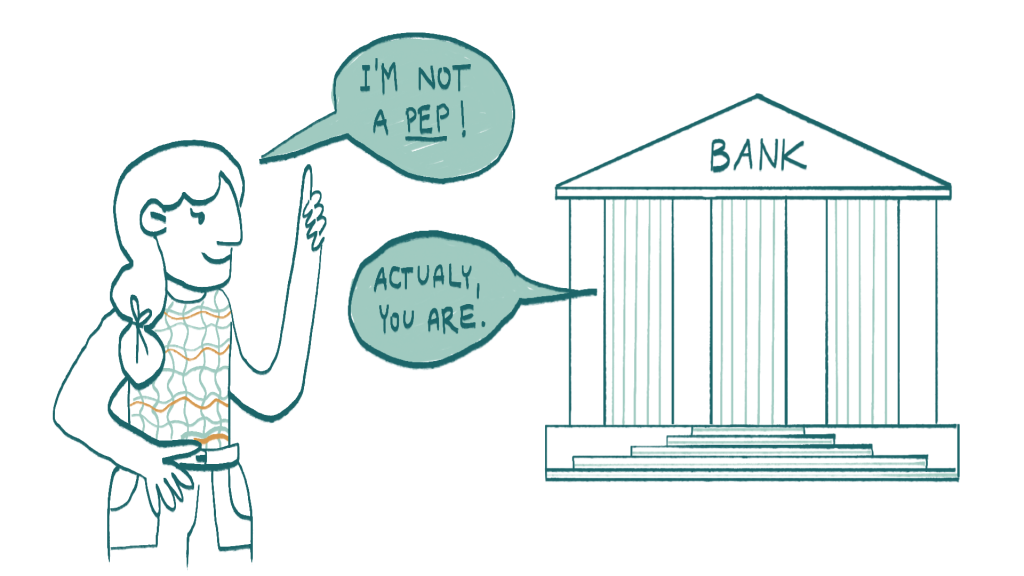
I am a statutory representative of a company one shareholder of which s is a state-owned joint-stock company. However, it is only a minority shareholder, even though the Commercial Register states that it holds a majority share. Under the articles of association, the shares held by the state shareholder carry only 5% of the voting rights and a 10% share of profits. Therefore, the company in which I act as a statutory representative is not state-controlled. I am not even a nominee of the state-owned shareholder. Despite that, banks consider me as a Politically Exposed Person (PEP) which causes all sorts of practical issues. My banking transactions are delayed, some products are unavailable to me, and others can only be made available with additional documentation. How can I explain that I am not a PEP as such?
You are probably not going to like the answer. Under Slovak Act No. 297/2008 Coll. on the Prevention of Money Laundering and Terrorist Financing (the AML Act), a Politically Exposed Person (PEP) is any natural person who has been entrusted with a “prominent public function”. Such functions, under Section 6(2)(g) of the AML Act explicitly include “a member of the administrative, management or supervisory body of a state-owned enterprise”. The Act does not stipulate any threshold for the level of state ownership. This means that even if the state holds as little as 0.1% in a company, it is still deemed “a state-owned enterprise”, and every statutory representative of that company is automatically a PEP.
The Slovak regulation is based on Directive (EU) 2015/849 of the European Parliament and of the Council (the Fourth AML Directive), under which PEPs also include “members of the administrative, management or supervisory bodies of state-owned enterprises”. However, the Slovak transposition is overly strict and, in our view, inconsistent with the intention of the EU legislation. The general term “state-owned enterprise” in the Directive indicates that the entity is meant to be genuinely state-owned, i.e. controlled by the state, rather than any entity in which the state merely holds some shares.
The transposition of the Directive by the Czech Republic follows the above reasoning. Section 4(5) of the Czech AML Act states that a PEP is “a member or representative of a member, if a legal person, of the management or supervisory body of a business enterprise controlled by the state”. A company controlled by the state means that the state must hold a majority share in the company, enabling it to exercise control.
In Slovakia, however, we are governed by the Slovak AML Act, which clearly states that members of the bodies of state-owned enterprises are Politically Exposed Persons s without specifying the level of such state ownership. Banks and financial institutions therefore apply a blanket approach: if the state holds any shares in a company, members of its corporate bodies are treated as PEPs without exception.
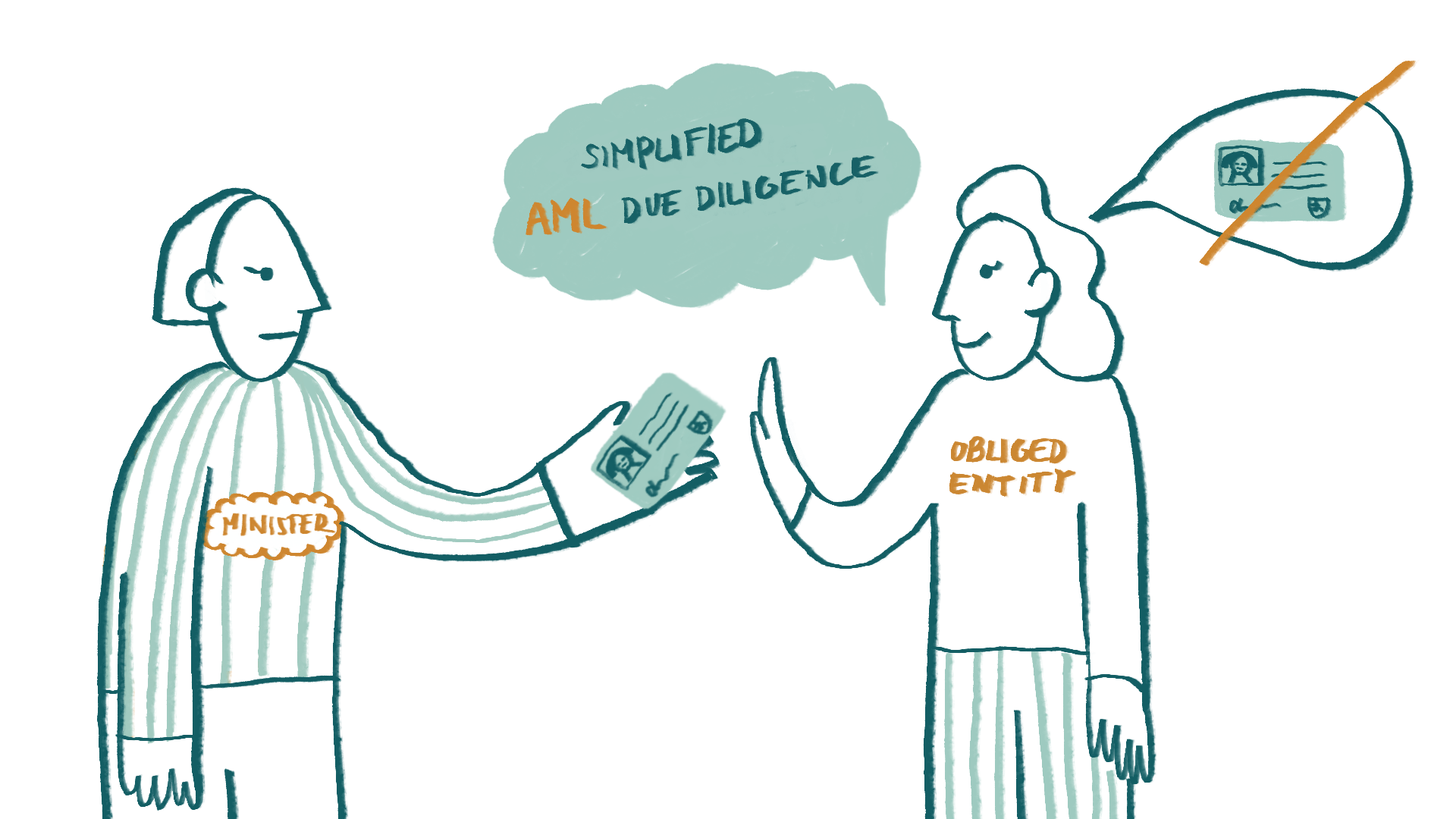
We may not like it, but banks actually have no other option. They cannot apply a more rational risk-based approach, such as that used by banks in the United Kingdom. The UK’s Financial Conduct Authority (FCA), expressly recommends, in relation to representatives of statutory bodies of state-owned enterprises, that financial institutions consider in particular: i) whether the state owns at least 50% of the entity, or ii) whether it has actual control or influence arising from corporate documents. In addition, the FCA expressly notes that not all PEPs present the same level of risk. It distinguishes between “higher-risk” and “lower-risk” PEPs and calls on banks and financial institutions not to apply the PEP regime mechanically but rather based on a risk assessment. Factors that, according to the FCA, reduce the level of risk include situations where the person has no decision-making powers, operates in a stable environment, discloses their income, and holds a role that is more formal than executive.
Until the existing legislation is amended in Slovakia, or at least guidance on how to interpret the law is issued by the National Bank of Slovakia or the Financial Intelligence Unit, your only option is to communicate with your bank or other financial institution, provide them with the facts about your position and explain that you do not fit the profile of a typical PEP. Although the law formally recognizes you as one, there are no objective grounds for you to be considered a higher-risk client. This may help your transactions to be processed more smoothly and avoid issues with product availability.